
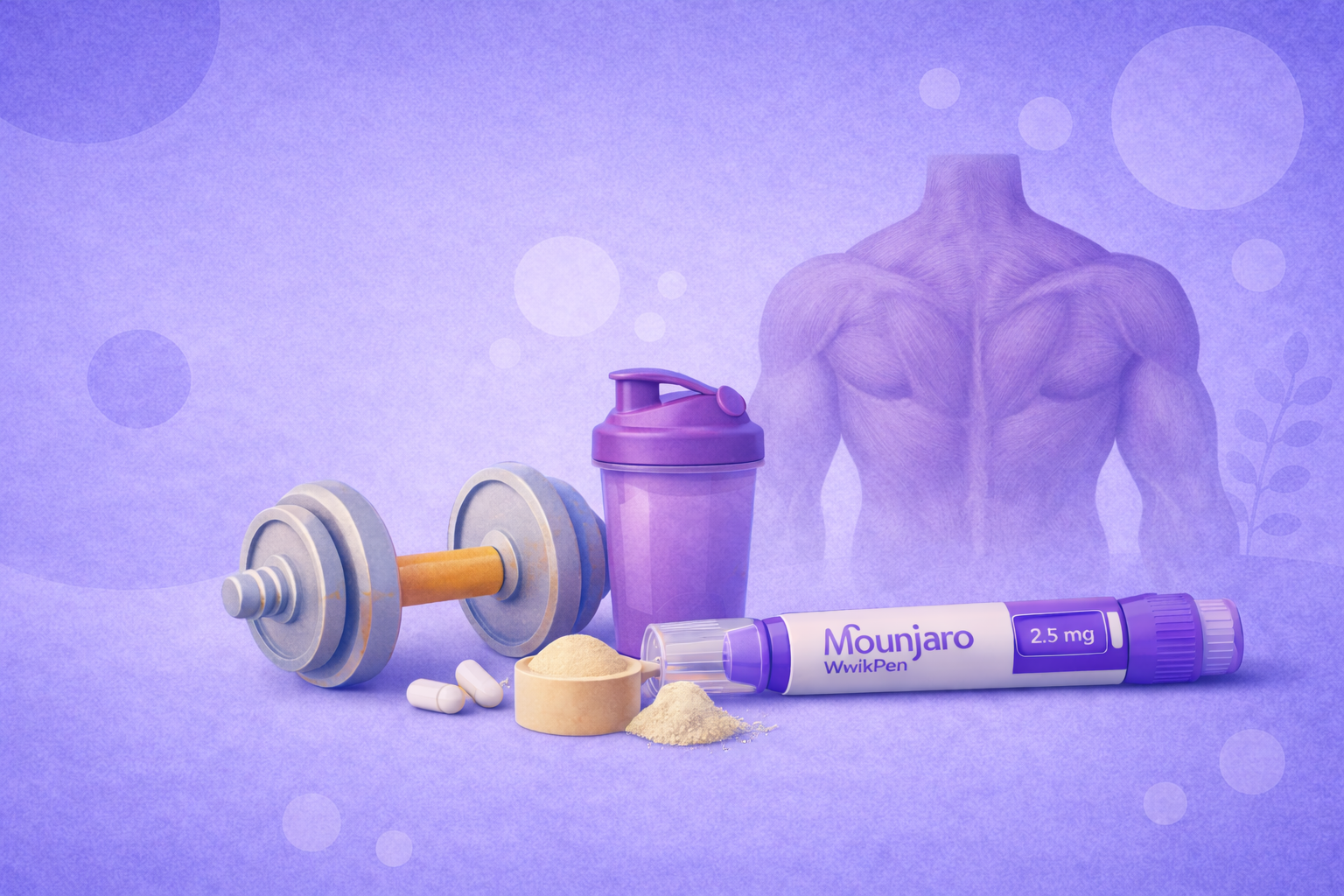
While Mounjaro can support significant weight loss, some patients worry about losing muscle along with body fat. Understanding how to prevent muscle loss on Mounjaro can help ensure the weight you lose comes primarily from fat while maintaining healthy lean muscle mass.
Mounjaro (tirzepatide) is a prescription weight-loss injection that helps reduce appetite and improve blood sugar control. By activating both GLP-1 and GIP receptors, it helps people eat less and achieve significant weight loss when combined with lifestyle changes.
However, when people lose weight quickly, the body may lose both fat mass and lean mass, which includes muscle. While most weight lost with Mounjaro comes from body fat, some reduction in lean mass is expected during significant weight loss.
Maintaining muscle is important for long-term health. Lean muscle helps support metabolism, physical strength, and blood-sugar control. Taking steps to protect muscle mass while losing weight can help ensure that the weight lost comes primarily from fat.
This guide explains why muscle loss can occur during weight loss, whether Mounjaro contributes to muscle loss, and what you can do to maintain lean muscle during treatment.
Why Muscle Loss Can Happen During Weight Loss
Weight loss occurs when the body uses more energy than it receives from food. When calorie intake falls below the body’s energy needs, the body begins using stored energy reserves.
These reserves include:
-
Body fat, which is the main source of stored energy
-
Lean mass, including muscle tissue
Ideally, most weight loss comes from fat. However, during periods of rapid or significant weight loss, the body may also break down muscle tissue to support energy needs.
Several factors can increase the likelihood of muscle loss during weight loss, including:
-
Very low calorie intake
-
Low protein intake
-
Limited physical activity
-
Lack of resistance or strength training
For this reason, maintaining muscle while losing weight typically requires adequate protein intake, physical activity, and a balanced calorie deficit. If you are unsure how large your calorie deficit should be, you can use our calorie deficit calculator to estimate an appropriate daily calorie target.
Does Mounjaro Cause Muscle Loss?
Mounjaro itself does not directly “cause” muscle loss. Instead, muscle loss can occur because the medication helps people eat less and lose weight more quickly. This is not unique to Mounjaro, and similar changes in body composition can occur with other GLP-1 medications. Our Mounjaro vs Wegovy comparison explains how the two treatments compare, including their effectiveness, side effects, and what to expect during treatment.
Clinical trials investigating tirzepatide have shown that most weight lost comes from body fat. For example, research analysing body composition changes during treatment found that:
-
Fat mass accounted for the majority of weight lost
-
A smaller proportion came from lean mass
Some reduction in lean mass during significant weight loss is normal and occurs with many weight-loss methods, including diet-based programmes.
However, lifestyle factors such as nutrition, protein intake, and exercise play an important role in determining how much muscle is preserved during weight loss.
Why Preserving Muscle Mass Is Important
Lean muscle mass plays a key role in overall health and physical function.
Maintaining muscle during weight loss can help:
-
Support a healthy metabolism
-
Maintain strength and mobility
-
Improve insulin sensitivity
-
Support blood-sugar control
-
Reduce the risk of frailty or falls later in life
Losing too much muscle during weight loss may lead to reduced strength, fatigue, and slower metabolic rate. For this reason, preserving lean mass is an important part of sustainable and healthy weight management.
How Much Protein Do You Need on Mounjaro?
Protein is essential for maintaining and repairing muscle tissue. Maintaining adequate protein intake is particularly important during weight loss treatment. Our Mounjaro diet plan guide explains how to structure meals to support fat loss while protecting lean muscle mass.
Protein helps the body:
-
Maintain lean muscle mass
-
Repair tissues after exercise
-
Support immune function
-
Maintain satiety and appetite control
Most adults are recommended to consume approximately 0.75 grams of protein per kilogram of body weight per day as a general guideline. However, during weight loss or increased physical activity, some people may benefit from slightly higher intake.
Good sources of protein include:
-
Eggs
-
Fish
-
Greek yoghurt
-
Tofu or tempeh
-
Lean meats
-
Quinoa
-
Beans and lentils
-
Nuts and seeds
Spreading protein intake across meals can also help support muscle maintenance.
Resistance Training to Preserve Muscle
Resistance training is one of the most effective ways to maintain or build muscle during weight loss.
Strength-based exercise encourages the body to retain muscle tissue by placing mechanical demand on the muscles.
Examples of resistance training include:
-
Weightlifting (dumbbells, barbells, kettlebells)
-
Bodyweight exercises such as push-ups or squats
-
Resistance band training
-
Pilates or functional strength exercises
Many health organisations recommend two strength-training sessions per week to help maintain muscle mass and support overall health.
Even moderate resistance training can help reduce the amount of muscle lost during weight loss.
Calories and Muscle Preservation
Weight loss typically requires a calorie deficit, but extremely low calorie intake can increase the risk of muscle loss.
A moderate and sustainable calorie deficit is generally more effective for preserving lean mass while losing body fat.
Gradual weight loss allows the body to adapt and reduces the likelihood that muscle tissue will be used as an energy source. For a breakdown of how weight loss typically progresses during treatment.
Combining a moderate calorie deficit with:
-
Adequate protein intake
-
Regular resistance training
-
Consistent physical activity
can help improve the proportion of weight lost from fat rather than muscle.
Supplements That May Help
Some people consider supplements to support muscle maintenance during weight loss. Our Mounjaro supplements guide explains which vitamins, protein supplements, and nutritional support options may be useful during treatment.
Common supplements that may help support muscle health include:
-
Protein powders, which can help increase daily protein intake
-
Creatine, which may support strength and muscle performance during resistance training
-
Vitamin D, which plays a role in muscle function and bone health
However, supplements are not necessary for everyone and should not replace a balanced diet. If you are considering supplements while using weight-loss medication, it is advisable to speak with a healthcare professional. Digestive symptoms can sometimes influence food intake during treatment. Our Mounjaro side effects guide explains common symptoms and practical ways to manage them.
When Muscle Loss May Be a Concern
Some loss of lean mass during significant weight loss is normal. However, excessive muscle loss may be more likely if:
-
Calorie intake is extremely low
-
Protein intake is insufficient
-
Physical activity levels are very low
-
Weight loss occurs very rapidly
If you experience significant fatigue, weakness, or difficulty maintaining physical activity, it may be worth discussing your diet or treatment plan with a healthcare professional.
Regular monitoring and lifestyle adjustments can help ensure weight loss remains healthy and sustainable.
Conclusion
Mounjaro can support meaningful weight loss by reducing appetite and helping people maintain a calorie deficit. While some lean mass loss can occur during weight reduction, lifestyle factors play a major role in determining how much muscle is preserved.
Maintaining adequate protein intake, performing regular resistance training, and avoiding extreme calorie restriction can help support muscle health during treatment.
By combining Mounjaro with balanced nutrition and physical activity, it is possible to achieve weight loss while maintaining lean muscle mass and supporting long-term health.
Start Your GLP-1 Treatment Safely
Complete our quick and secure online consultation. Our pharmacy team will review your answers and advise on the most suitable GLP-1 weight-loss treatment for you.
Start Your Weight Loss Consultation →FAQs
Does Mounjaro cause muscle loss?
How much muscle can you lose on Mounjaro?
How can I prevent muscle loss while taking Mounjaro?
How much protein should you eat while on Mounjaro?
Does resistance training help preserve muscle during weight loss?
Can you build muscle while taking Mounjaro?
Is losing some muscle during weight loss normal?
Does rapid weight loss increase muscle loss?
What foods help maintain muscle while losing weight?
Should you exercise while taking Mounjaro?


References
1. Tirzepatide Once Weekly for the Treatment of Obesity (SURMOUNT-1 Trial)
• Phase 3 clinical trial evaluating the safety and effectiveness of tirzepatide for weight loss, including analysis of body-composition changes – PubMed
2. Changes in Body Composition During Weight Loss with Tirzepatide
• Clinical paper examining reductions in fat mass and lean mass during tirzepatide-associated weight loss – PubMed
3. How much protein can the body use in a single meal for muscle-building? Implications for daily protein distribution
• Review discussing how protein distribution across meals may support muscle protein synthesis and lean mass retention – PubMed
4. Dietary protein to maximize resistance training: a review and examination of protein spread and change theories
• Scientific review examining the role of dietary protein intake alongside resistance training to support muscle development and preservation – PubMed Central (PMC)
5. NHS Guidance on Healthy Weight Loss
• Evidence-based guidance on sustainable weight loss, physical activity and maintaining muscle mass during dieting – NHS
6. NICE Guidance on the Management of Overweight and Obesity
• UK clinical guideline covering lifestyle interventions, diet, exercise and pharmacological treatments for obesity management – National Institute for Health and Care Excellence (NICE)
Medically Reviewed by Our GPhC-Registered Pharmacists


GPhC Inspection Result
Inspection Outcome: All Standards Met ✅
Our digital-first pharmacy achieved rare “Good Practice” recognition during our GPhC inspection on 19 May 2025 — showcasing our commitment to safe, high-quality and innovative online healthcare.
View full inspection report →GPhC Registration No. 9012585 | Inspected 19 May 2025