
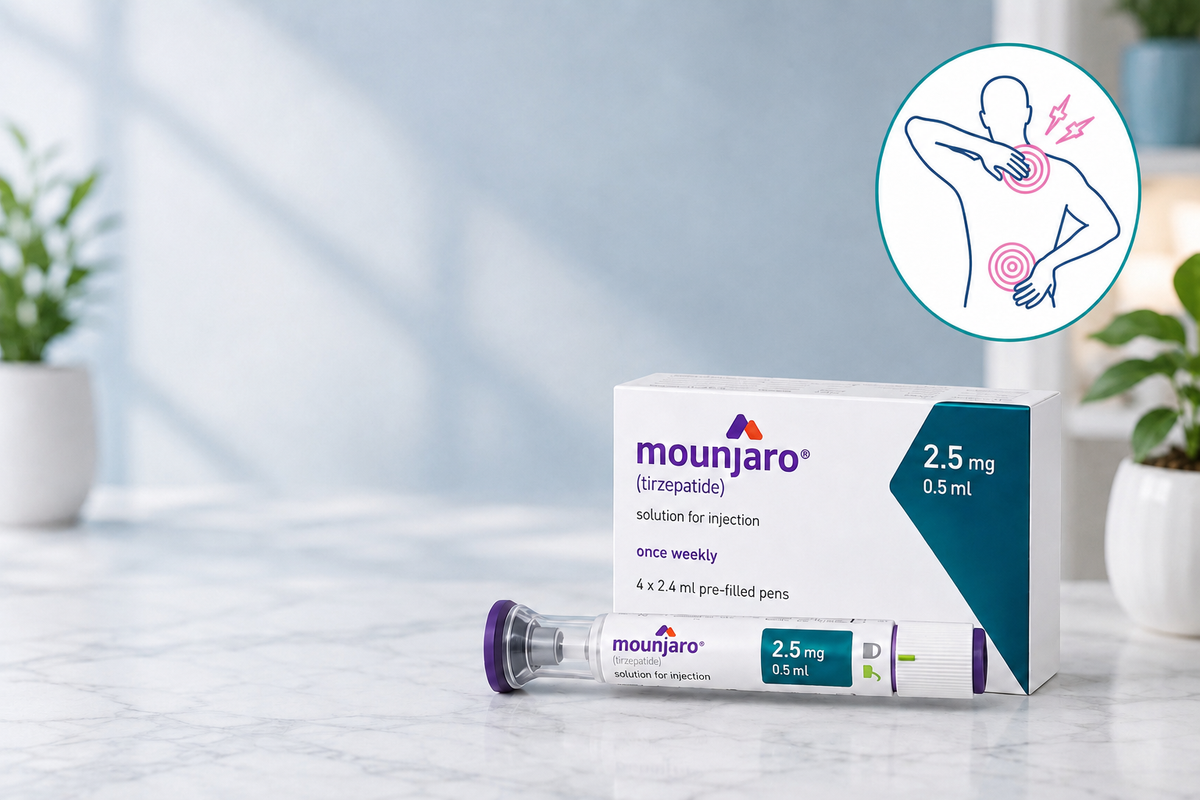
Does Mounjaro Cause Body Aches?
Yes, body aches are a recognised side effect of Mounjaro (tirzepatide). They tend to occur most often in the early weeks of treatment or after a dose increase, and for most people they are mild and short-lived. The aching is usually muscular rather than joint-related, and it rarely requires stopping the medication.
Key Points
- Body aches are a known side effect of Mounjaro and are most common in the first few weeks of treatment or after a dose increase.
- The aching is often described as flu-like and is thought to be linked to how tirzepatide affects metabolism, appetite, and calorie intake.
- Rapid weight loss itself can cause muscle soreness, particularly if your diet changes significantly.
- Simple measures like staying hydrated, eating enough protein, and light movement can help reduce discomfort.
- Most body aches settle within a few days to a couple of weeks and do not require stopping Mounjaro.
- Seek medical advice if aches are severe, worsening, or accompanied by symptoms such as dark urine, significant muscle weakness, or swelling.
Contents
Jump to the section you need:
Why Mounjaro Causes Body Aches
When I speak to patients starting Mounjaro weight loss injections, body aches are one of the more surprising side effects they mention. People often expect nausea or reduced appetite, but the generalised aching catches many of them off guard. It is worth understanding why it happens, because it makes it much easier to manage.
Tirzepatide, the active ingredient in Mounjaro, works by activating both GIP and GLP-1 receptors. This dual mechanism is what makes it particularly effective for weight loss, but it also means the body is experiencing quite significant metabolic changes from the first injection onwards. In the early stages, your body is essentially adapting to a new hormonal signalling environment. Appetite drops sharply, calorie intake falls, and your metabolism begins to shift. This combination can cause a range of physical symptoms, including fatigue, nausea, and musculoskeletal discomfort.
From a clinical perspective, the body aches associated with Mounjaro are not fully understood in terms of their exact mechanism. What the clinical trial data does show is that musculoskeletal pain and back pain were reported by a meaningful proportion of participants, particularly in the higher dose groups. The SmPC (Summary of Product Characteristics) for Mounjaro lists back pain and musculoskeletal pain as common side effects, meaning they occur in at least one in a hundred users. In practice, I see it more often than that, especially in the first month of treatment.
One factor that I think is often overlooked is the change in eating patterns. When someone is eating significantly less, they may not be getting adequate electrolytes, protein, or micronutrients. Deficiencies in magnesium, for instance, are strongly associated with muscle cramps and aching. It is not always the medication doing it directly. Sometimes the reduction in food intake is a contributing factor, and addressing that can make a real difference.
| Side Effect | Frequency (SmPC classification) | Typical onset |
|---|---|---|
| Back pain | Common (≥1/100) | Early weeks or after dose increase |
| Musculoskeletal pain | Common (≥1/100) | Variable; often with dose escalation |
| Fatigue | Common (≥1/100) | First 1–4 weeks |
| Nausea | Very common (≥1/10) | First few days after injection |
| Headache | Common (≥1/100) | First 1–2 weeks |
Key takeaway: Body aches on Mounjaro are a recognised side effect, listed in the SmPC as common. They are most likely linked to the body's adaptation to significant metabolic change, combined in some cases with reduced nutrient intake from eating less.
The Flu-Like Feeling: What Is Actually Happening
A common question I hear is: does Mounjaro make you feel like you have the flu? Honestly, yes, for some people it does. The combination of generalised aching, fatigue, mild headache, and reduced appetite is strikingly similar to the early stages of a viral illness. Patients sometimes contact me worried they have actually come down with something, only to find the symptoms pass on a predictable schedule, usually within a day or two of their weekly injection.
The reason for this flu-like pattern may relate to how the body processes tirzepatide. GLP-1 receptor agonists are known to stimulate certain immune and inflammatory pathways, and some researchers believe the systemic discomfort may be a mild immune response to the drug itself or to the rapid metabolic changes it induces. It is not a full immune reaction in the way a vaccine produces one, but the symptom overlap is enough to cause confusion.
The timing is the key distinguishing feature. Mounjaro-related flu-like symptoms tend to peak within 24 to 48 hours of each weekly injection and then gradually improve. A true viral illness does not follow that weekly rhythm. If you find your symptoms appear reliably the day after your injection and resolve by day two or three, that pattern strongly suggests the medication rather than an infection. That said, if you develop a high temperature, significant chest symptoms, or the aching is much more severe than usual, you should seek medical advice rather than assuming it is the medication.
I often advise patients to plan their injections for a day when they can rest the following day if needed. Not everyone experiences this, and many people have no flu-like symptoms at all. But if you are someone who does, knowing it is expected and time-limited makes it far easier to manage. Understanding the full picture of Mounjaro side effects and how to treat them can help you feel prepared rather than alarmed.
Key takeaway: Flu-like aching on Mounjaro is real and fairly common. It typically peaks within 48 hours of each injection and then eases. If symptoms follow this weekly rhythm, they are most likely medication-related rather than a genuine infection.
Weight Loss and Muscle Soreness
A question I get asked often is whether body aches are normal when you are losing weight rapidly. The honest answer is yes, they can be, and Mounjaro adds a layer of complexity because it can cause quite swift reductions in body weight. Understanding the difference between aches caused by the medication itself and those caused by the physical process of losing weight quickly helps patients feel more in control of what is happening to their body.
When we lose weight rapidly, particularly on a significant calorie deficit, the body draws on both fat stores and, to a lesser extent, muscle tissue. This is sometimes called muscle catabolism. Even modest muscle loss can result in generalised soreness and weakness, particularly in the legs and lower back. The muscles are quite literally changing in composition, and that process is not always comfortable. This is one of the reasons why protein intake and resistance exercise are both emphasised in clinical guidance for people using GLP-1 class medications.
Dehydration is another factor I raise with nearly every patient. Nausea, reduced appetite, and reduced fluid intake from eating less (since food contributes a meaningful proportion of our daily fluid intake) can all lead to mild dehydration. Dehydration itself causes headaches, fatigue, and muscle cramps that many people describe as "body aches". In my experience, some patients who report body aches on Mounjaro are actually mildly dehydrated. Simply increasing fluid intake can make a noticeable difference within a day or two.
Electrolyte Balance
Magnesium deficiency is particularly relevant here. Magnesium plays a central role in muscle contraction and relaxation, and low levels are closely associated with muscle cramps and aching. People eating very little, especially those cutting carbohydrates as well as calories, can deplete magnesium stores faster than usual. Potassium is similar. I do not routinely recommend electrolyte supplementation for everyone on Mounjaro, but if aching is significant and dietary intake has reduced substantially, it is worth considering and discussing with your GP or pharmacist.
| Contributing factor | How it causes aching | What can help |
|---|---|---|
| Rapid calorie reduction | Muscle catabolism, energy depletion | Adequate protein intake (1.2–1.6g per kg body weight) |
| Dehydration | Muscle cramps, fatigue, headaches | Increase fluid intake; aim for 2–2.5 litres daily |
| Magnesium deficiency | Muscle cramps, generalised soreness | Dietary sources (nuts, seeds, leafy greens) or supplement if advised |
| Reduced physical activity | Stiffness, deconditioning soreness | Gentle daily movement; light walking or stretching |
| Tirzepatide mechanism | Metabolic adaptation, possible inflammatory response | Usually settles over time; paracetamol for short-term relief |
Key takeaway: Muscle soreness during rapid weight loss is normal and is not always caused by Mounjaro directly. Dehydration, low protein intake, and electrolyte imbalances are all contributing factors that are straightforward to address.
Managing Body Aches While Taking Mounjaro
The good news is that most body aches on Mounjaro are manageable without any change to the medication itself. I always encourage patients to try practical measures first before assuming they need to reduce their dose or stop treatment. The steps below are ones I regularly discuss with patients in my day-to-day practice, and they do make a genuine difference for the majority of people.
Hydration and Nutrition
Drink enough water throughout the day, not just when you feel thirsty. On Mounjaro, the sensation of thirst can be muted alongside appetite, so it is easy to under-drink without realising. I suggest aiming for at least two litres of water daily, more if you are active. Eating enough protein on Mounjaro is equally important. The general guidance for people using GLP-1 class medications is around 1.2 to 1.6 grams of protein per kilogram of body weight per day. This supports muscle preservation and can reduce the aching that comes from muscle loss.
Even if your appetite is very low, try to include protein-rich foods like eggs, Greek yoghurt, lean meat, fish, or legumes at each small meal. Some patients find protein shakes useful when nausea makes eating whole foods difficult. The key is not to let the calorie deficit become so severe that the body has no choice but to draw heavily on muscle.
Pain Relief and Physical Comfort
For short-term relief of mild aching, paracetamol taken at the recommended dose is generally the safest option. Ibuprofen and other NSAIDs (Nonsteroidal Anti-Inflammatory Drugs) can be effective for musculoskeletal pain, but I am cautious about routine use in people who are already experiencing nausea or gastrointestinal symptoms from Mounjaro, as NSAIDs can worsen gut irritation. If you do use ibuprofen, take it with food and do not use it for more than a few days without speaking to a pharmacist or GP.
Gentle movement helps more than rest for muscular aching. I know the temptation when you are sore is to stay still, but light walking or gentle stretching promotes blood flow to aching muscles and can significantly reduce discomfort. A warm bath or heat pad on sore muscle groups is also genuinely helpful and underused as a practical measure. Sleep and rest matter too. Your body is going through significant changes and recovery requires adequate sleep.
Injection Timing
If your aches follow a clear pattern in relation to your injection day, consider switching to an evening injection on a day before a rest day. That way, if you have a difficult 24 to 48 hours, you are not trying to push through a working day at the same time. It is a small practical adjustment but one I find patients genuinely appreciate once they make it.
Key takeaway: Most body aches on Mounjaro can be managed with hydration, adequate protein, paracetamol for short-term relief, and gentle movement. Adjusting your injection timing to a rest day can also reduce the impact on daily life.
When to Seek Medical Advice About Body Aches
The vast majority of people who experience body aches on Mounjaro do not need to escalate to a GP. The aching is usually mild, follows a predictable pattern, and resolves without intervention. That said, there are specific circumstances where I would want a patient to seek medical advice promptly, and it is important to know what these are rather than dismiss all symptoms as the medication.
Significant muscle weakness alongside pain is one red flag. This combination, particularly if it comes on suddenly, can indicate a more serious muscle condition called myopathy, or in rare cases rhabdomyolysis, which involves the breakdown of muscle tissue releasing proteins into the bloodstream that can affect the kidneys. It is rare, but it is serious. Dark or cola-coloured urine is a key warning sign associated with this and should prompt urgent medical review.
Severe or worsening aches that do not follow the typical pattern, persist beyond two to three weeks, or are localised to a specific joint or area of the body may have a cause unrelated to Mounjaro. It is always reasonable to have persistent or unusual symptoms investigated rather than attributing everything to the medication. Similarly, if you develop a high temperature (above 38°C), significant chest or abdominal pain, or swelling alongside the body aches, please seek medical attention rather than waiting for symptoms to resolve.
Pancreatitis is a known rare risk with GLP-1 receptor agonists. It typically presents as severe, persistent abdominal pain that radiates to the back, often with nausea and vomiting. While this is not the same as generalised body aching, I mention it because patients sometimes describe upper abdominal pain in vague terms as "body aches". If you have persistent pain in the upper abdomen or back that is severe and does not settle, please seek urgent medical assessment.
| Symptom | What it may indicate | Action |
|---|---|---|
| Mild aching, peaks within 48 hrs of injection | Normal medication side effect | Self-manage; monitor for change |
| Severe muscle weakness with pain | Possible myopathy | See GP promptly |
| Dark or cola-coloured urine | Possible rhabdomyolysis | Seek urgent medical care |
| Severe persistent abdominal or back pain | Possible pancreatitis | Seek urgent medical care; stop Mounjaro |
| Aching persisting beyond 2–3 weeks | May be unrelated to medication | Speak to GP for further assessment |
| Fever above 38°C with aching | Possible infection or inflammatory condition | Seek medical advice same day |
Key takeaway: Mild, predictable body aches on Mounjaro are expected and self-limiting. Seek prompt medical advice for severe muscle weakness, dark urine, high fever, persistent abdominal pain, or any aches that are worsening rather than improving.
Summary: Mounjaro Body Aches
Body aches are a recognised and common side effect of Mounjaro that most people can manage comfortably without stopping treatment.
- Tirzepatide causes significant metabolic changes that can produce generalised aching, particularly in the early weeks or after a dose increase.
- A flu-like pattern of aching and fatigue in the 24 to 48 hours after each injection is common and usually self-limiting.
- Dehydration, reduced protein intake, and electrolyte imbalances from eating less can all contribute to muscle soreness and should be addressed first.
- Paracetamol, adequate hydration, protein-rich food, and gentle movement are the most effective self-management strategies.
- Changing your injection to an evening before a rest day can reduce the impact of post-injection symptoms on daily life.
- Seek medical advice for severe muscle weakness, dark urine, high fever, persistent abdominal pain, or any symptoms that are worsening.
If you have questions about body aches or any other side effects during your treatment, speak to the Happy Pharmacy team before making any changes to your dose or injection schedule.
Frequently Asked Questions
How long do body aches last on Mounjaro?
For most people, body aches linked to Mounjaro are at their worst in the first one to four weeks of starting treatment or after moving to a higher dose. The acute flu-like aching that follows each injection typically peaks within 24 to 48 hours and then fades. Over time, as the body adjusts to the medication, most patients find the aching becomes less noticeable or disappears altogether. If aches are still significant after four to six weeks at a stable dose, it is worth speaking to your prescriber, as this lies outside the typical pattern.
Can I take ibuprofen or paracetamol for body aches while on Mounjaro?
Paracetamol is generally the safer choice for people experiencing body aches on Mounjaro, particularly if you are also dealing with nausea or stomach discomfort. It does not irritate the stomach lining and does not interact with tirzepatide directly. Ibuprofen and other NSAIDs are effective for musculoskeletal pain but can worsen gastrointestinal symptoms, which are already common on Mounjaro. If you choose to use ibuprofen, take it with food and limit use to a few days at a time. Always check with your pharmacist if you are unsure which option is most appropriate for you, particularly if you have any pre-existing kidney, stomach, or cardiovascular conditions.
Why do my muscles ache more after a Mounjaro dose increase?
Dose increases on Mounjaro effectively restart the adjustment process. Your body has adapted to the previous dose, but moving up to a higher dose means a new round of metabolic change, appetite suppression, and reduced calorie intake. Muscles have to adapt again to altered energy availability and hormonal signalling, which is why aching often returns or worsens at each escalation step. This is expected and does not mean anything is going wrong. The dose escalation schedule for Mounjaro is specifically designed to be gradual for this reason. Staying well hydrated and keeping up protein intake around the time of a dose change can help reduce the severity.
Could my body aches on Mounjaro be a sign of something serious?
In the vast majority of cases, body aches on Mounjaro are a benign, expected side effect. Serious causes are rare but should be ruled out if symptoms fall outside the typical pattern. Red flags that warrant prompt medical attention include severe muscle weakness (not just aching), dark or cola-coloured urine (which can indicate rhabdomyolysis, a form of muscle breakdown), severe abdominal or back pain (which could suggest pancreatitis), or any aches accompanied by fever above 38°C. Aches that are localised to a single joint, worsening over weeks rather than improving, or appearing for the first time after months of stable treatment should also be investigated by a GP.
Should I stop taking Mounjaro if my body aches are bad?
You should not stop Mounjaro without speaking to your prescriber first. If body aches are significantly affecting your quality of life, there are options worth exploring before discontinuing treatment. Your prescriber may suggest delaying the next dose increase, staying at your current dose for longer to allow more time to adjust, or reviewing your diet and hydration. Simply stopping the medication abruptly means losing the metabolic benefits you have built up, and it can also cause rebound in appetite and weight. The right course of action depends on the severity and nature of your symptoms, which is why a conversation with your prescribing pharmacist or GP is the right first step.
Does exercise make body aches worse on Mounjaro?
Light to moderate exercise is generally beneficial and is unlikely to worsen medication-related aching. In fact, gentle movement such as walking, swimming, or stretching tends to reduce muscular soreness by improving circulation and keeping muscles active and flexible. What can worsen aching is intense or high-impact exercise on a significant calorie deficit, because the body does not have the energy reserves to recover properly. If you are exercising while on Mounjaro, make sure you are eating enough protein around workouts and staying hydrated. Heavy resistance training or high-intensity sessions should be approached with care if you are eating very little, and any exercise that leaves you feeling significantly worse for days afterwards is worth scaling back.
A Note from Our Pharmacist
Palvinder Deol, Superintendent Pharmacist, Happy Pharmacy
One of the patients I speak to most about this is someone who came back to me three weeks into starting Mounjaro, convinced it was not working for her because she felt so unwell. She had lost around 3kg already, but the aching and fatigue were making her question whether it was worth continuing. She described it as feeling as though she had flu but without the temperature or sore throat. When I explained the pattern, that the worst of it tends to follow the injection day and usually eases significantly by month two, she visibly relaxed. She said nobody had told her to expect it, and that made it feel much more alarming than it needed to. I find that simply naming the side effect, explaining why it happens, and setting a realistic timeline for when it tends to ease is more useful than almost anything else I can offer.
The other thing I notice regularly is that patients who are drinking very little water, because nausea is putting them off eating and drinking, often feel much worse than those who are staying hydrated. Dehydration amplifies nearly every other side effect. If you take away one thing from this guide, let it be this: keep drinking water, keep your protein up even in small amounts, and give your body a few weeks to find its rhythm with the medication. Most people come through that early phase and feel considerably better on the other side of it.
References
1. Electronic Medicines Compendium (eMC) – Mounjaro 2.5 mg solution for injection in pre-filled pen: Summary of Product Characteristics
• Full prescribing information for tirzepatide including listed side effects, frequency classifications, and safety information – Electronic Medicines Compendium (eMC)
2. NHS – Tirzepatide (Mounjaro)
• NHS patient-facing information on tirzepatide, including common side effects and when to seek medical advice – NHS.uk
3. MHRA – Tirzepatide (Mounjaro): approval and regulatory information
• MHRA regulatory overview of tirzepatide approval for weight management in the UK – GOV.UK / MHRA
4. Jastreboff AM et al. – Tirzepatide Once Weekly for the Treatment of Obesity (SURMOUNT-1)
• Phase 3 clinical trial data reporting efficacy and adverse effects of tirzepatide including musculoskeletal and gastrointestinal side effects – New England Journal of Medicine
5. BNF – Tirzepatide: drug monograph
• British National Formulary monograph covering indications, cautions, side effects, and monitoring for tirzepatide – British National Formulary (BNF)


Share:
Mounjaro Sweet Taste in Mouth: Causes and Management
Mounjaro Sleep Issues