
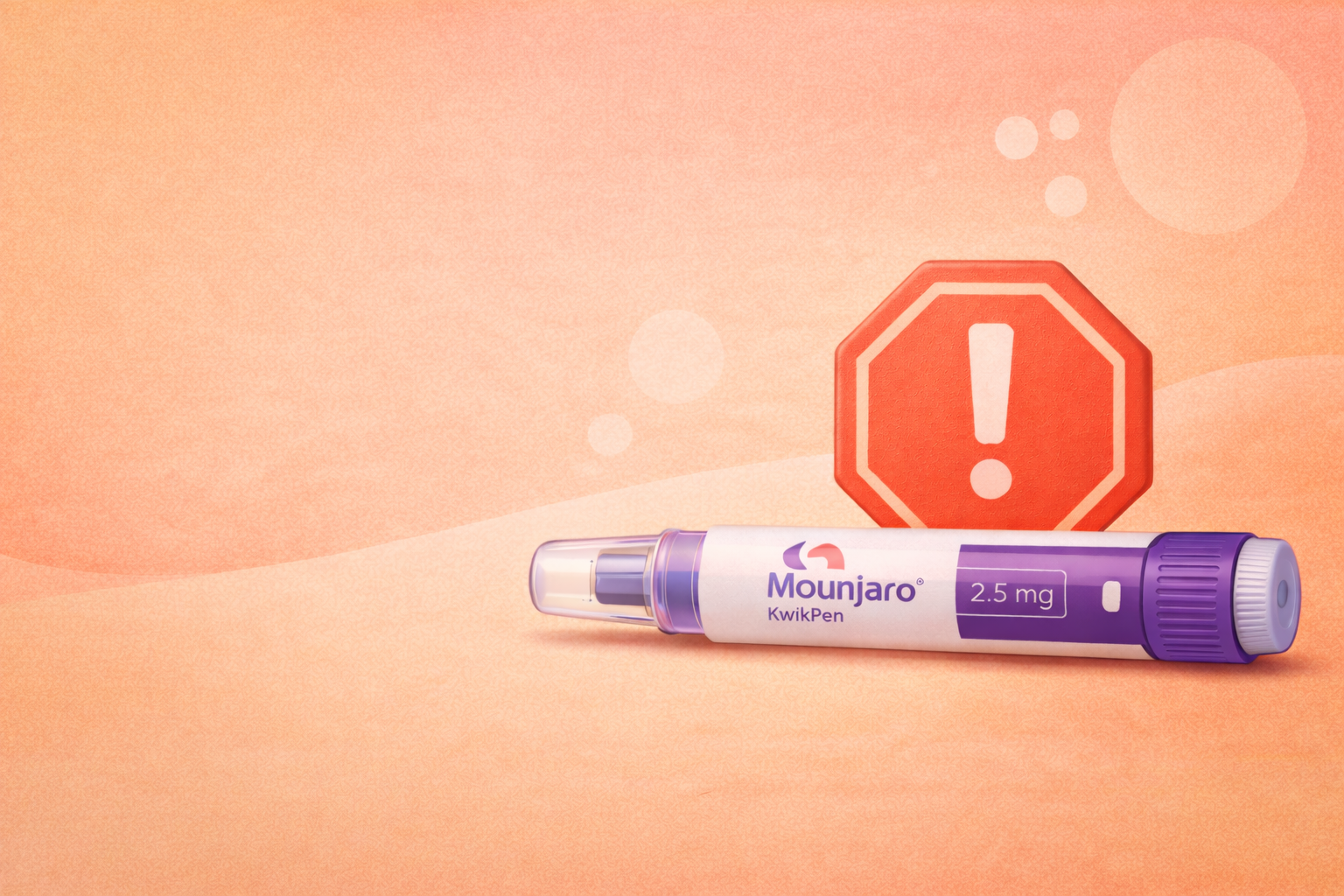
Stopping Mounjaro (tirzepatide) leads to a gradual reduction in its appetite-suppressing and metabolic effects. Most people notice hunger slowly increasing over several weeks, and some degree of weight regain may occur if dietary and lifestyle habits are not maintained. Maintaining a balanced, protein-focused diet can help support weight stability after treatment, as outlined in our Mounjaro diet plan.
However, the experience varies depending on how long you have been on treatment, your dose, and the changes you have implemented during therapy.
Mounjaro does not cause withdrawal symptoms in the traditional sense. Instead, the hormonal signals that regulate appetite and blood sugar slowly return to their natural baseline once the medication leaves your system.
How Long Does Mounjaro Stay in Your Body?
Mounjaro (tirzepatide) has a half-life of approximately 5 days. This means the medication declines gradually rather than stopping abruptly.
What This Means in Practice
-
It can take around 4–5 weeks for Mounjaro to fully clear from your body.
-
Appetite suppression may continue for a few weeks after your final dose.
-
Hormonal appetite signalling gradually returns to baseline.

Typical Timeline After Stopping
| Time After Final Injection | What You May Notice |
|---|---|
| Week 1–2 | Medication levels slowly decline. Appetite often still controlled. |
| Week 3–4 | Hunger signals may increase. Cravings can begin returning. |
| Week 4–6 | Medication largely cleared. Satiety effects reduce. |
| 2–6 Months | Weight may stabilise or increase depending on lifestyle habits. |
Everyone responds differently. Some people maintain weight successfully; others experience gradual regain.
Why Does Appetite Increase After Stopping?
Mounjaro works by activating GLP-1 and GIP receptors. These hormones:
-
Slow gastric emptying
-
Increase feelings of fullness
-
Reduce food cravings
-
Improve insulin sensitivity
When treatment stops, those amplified signals reduce. Your body’s natural hunger cues return.
Common experiences include:
-
Increased portion sizes
-
More frequent hunger between meals
-
Stronger cravings
-
Return of “food noise”
This is a physiological response, not a lack of willpower.
Will You Regain Weight After Stopping Mounjaro?
This is the most searched question and understandably so.
Clinical evidence from GLP-1 receptor agonist studies shows that some weight regain is common after discontinuation, particularly if no long-term lifestyle strategies are in place.
However, regain is usually gradual rather than immediate.
Factors That Influence Weight Maintenance
| Factor | Why It Matters |
|---|---|
| Duration of treatment | Longer use may allow stronger habit formation |
| Protein intake | Helps preserve lean muscle mass |
| Strength training | Protects metabolic rate |
| Calorie awareness | Reduces risk of passive overeating |
| Sleep quality | Influences appetite hormones |
| Emotional eating patterns | Major contributor to relapse |
Patients who actively maintain healthy behaviours are significantly more likely to preserve results.
Does Your Metabolism Slow Down?
Your metabolism does not “break” after stopping Mounjaro.
However, two important realities exist:
-
Weight loss lowers calorie requirements.
A smaller body naturally burns fewer calories. -
Appetite increases as medication clears.
This combination can make weight regain easier if calorie intake rises above new energy needs.
Maintaining lean muscle mass through resistance training is one of the most effective ways to protect metabolic rate after stopping.
Is It Safe to Stop Mounjaro Suddenly?
In most cases, yes. Mounjaro does not usually require tapering before stopping.
However, clinical guidance is strongly recommended, particularly if:
-
You have type 2 diabetes
-
You are taking other glucose-lowering medications
-
You experienced significant side effects
-
You are planning pregnancy
Stopping without supervision may lead to rising blood sugar levels in diabetic patients.
What Happens to Blood Sugar After Stopping?
For people using Mounjaro for type 2 diabetes:
-
HbA1c levels may gradually increase
-
Fasting glucose may rise
-
Medication adjustments may be needed
For individuals using Mounjaro solely for weight management:
-
Blood sugar changes are typically mild
-
Appetite regulation is the more noticeable shift
Monitoring is recommended if you have any metabolic conditions.
Psychological Effects of Stopping
Beyond physical changes, many patients report psychological shifts.
These may include:
-
Anxiety about regaining weight
-
Increased focus on food
-
Frustration if appetite returns strongly
-
Concern about losing progress
Obesity is recognised as a chronic, relapsing condition. For some individuals, longer-term pharmacological support may be appropriate under medical supervision.
Can You Restart Mounjaro Later?
In many cases, yes — but reassessment is required.
If restarting:
-
Treatment often begins again at a lower dose
-
Gradual dose escalation may be required
-
Eligibility must be reviewed
This depends on weight changes, side effects experienced previously, and overall health status.
Who May Benefit From Longer-Term Treatment?
Longer treatment duration may be considered if:
-
BMI remains above 30
-
BMI is above 27 with weight-related health conditions
-
Appetite remains difficult to control
-
Previous maintenance attempts were unsuccessful
For some individuals, weight management requires ongoing medical support rather than short-term treatment alone.
How to Reduce the Risk of Weight Regain
If you are planning to stop Mounjaro, preparation is key.
1. Increase Protein Intake
Adequate protein helps preserve muscle and improves satiety.
2. Strength Train 2–4 Times Weekly
Resistance training helps maintain metabolic rate.
3. Maintain Calorie Awareness
Light tracking or portion awareness can prevent gradual overeating. Our calorie deficit calculator can help estimate a daily calorie target to support sustainable weight loss.
4. Plan Structured Meals
Having pre-planned meals reduces impulsive eating when hunger returns.
5. Prioritise Sleep
Poor sleep increases hunger hormones such as ghrelin.
6. Seek Ongoing Support
Clinical follow-up improves long-term outcomes.
Common Myths About Stopping Mounjaro
| Myth | Reality |
|---|---|
| “You’ll regain all the weight immediately.” | Regain is typically gradual and variable. |
| “You must taper down slowly.” | Tapering is not usually required. |
| “Your metabolism will be permanently damaged.” | Metabolic rate adjusts normally to body weight. |
| “You become dependent on it.” | Mounjaro does not cause chemical dependency. |
Should You Stop Mounjaro?
Stopping may be appropriate if:
-
You have reached a sustainable weight
-
Side effects of Mounjaro outweigh benefits
-
You are planning pregnancy
-
Clinical review recommends discontinuation
-
Cost or access becomes an issue
A structured plan is always preferable to stopping abruptly without guidance.
Start Your GLP-1 Treatment Safely
Complete our quick and secure online consultation. Our pharmacy team will review your answers and advise on the most suitable GLP-1 weight-loss treatment for you.
Start Your Weight Loss Consultation →FAQs
What happens when you stop taking Mounjaro?
How long does Mounjaro stay in your system after stopping?
Will I regain weight after stopping Mounjaro?
Does your appetite come back after stopping Mounjaro?
Do you need to taper off Mounjaro?
Is it safe to stop Mounjaro suddenly?
What happens to blood sugar after stopping Mounjaro?
Can you restart Mounjaro after stopping?
Does stopping Mounjaro damage your metabolism?
How can I maintain weight loss after stopping Mounjaro?


References
1. Mounjaro (tirzepatide) Patient Information Leaflet
• Official patient information for Mounjaro KwikPen, including dosing, safety and discontinuation guidance – Electronic Medicines Compendium (emc)
2. Weight Regain After Withdrawal of GLP-1 Therapy (STEP 1 Extension Trial)
• Weight regain and cardiometabolic effects after withdrawal of semaglutide: the STEP 1 trial extension – PubMed
3. Tirzepatide for the Treatment of Obesity (SURMOUNT-1)
• Once-weekly tirzepatide in adults with obesity – New England Journal of Medicine
4. Clinical Guidance on Obesity Pharmacotherapy
• Obesity: identification, assessment and management (including pharmacological treatment) – National Institute for Health and Care Excellence (NICE)
5. Reporting Suspected Side Effects
• How to report suspected side effects or adverse reactions to medicines – MHRA Yellow Card Scheme
Medically Reviewed by Our GPhC-Registered Pharmacists


GPhC Inspection Result
Inspection Outcome: All Standards Met ✅
Our digital-first pharmacy achieved rare “Good Practice” recognition during our GPhC inspection on 19 May 2025 — showcasing our commitment to safe, high-quality and innovative online healthcare.
View full inspection report →GPhC Registration No. 9012585 | Inspected 19 May 2025