
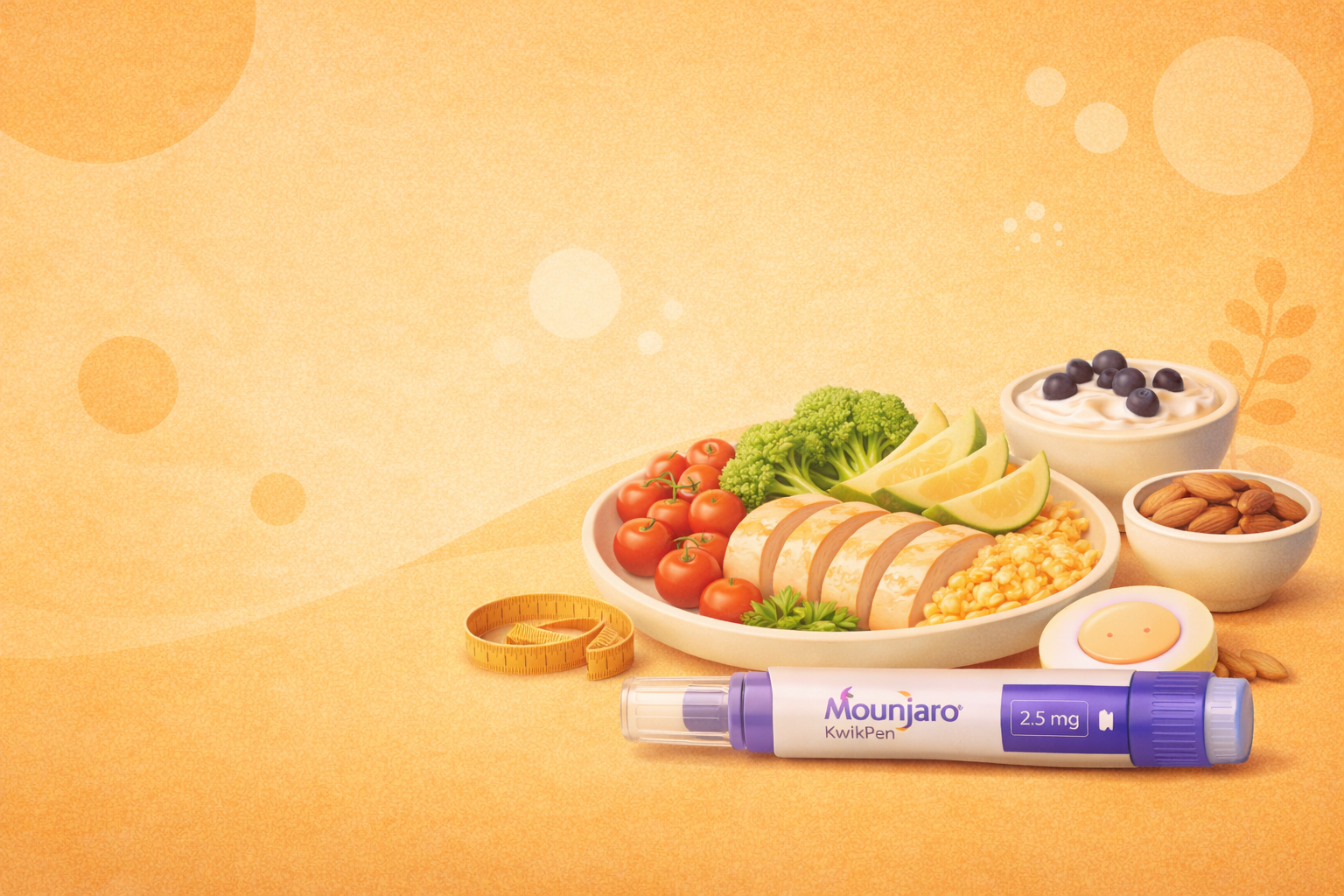
Why Your Diet Still Matters on Mounjaro
Mounjaro (tirzepatide) reduces appetite, slows gastric emptying, and improves blood sugar regulation. Because of this dual GLP-1 and GIP activity, many people naturally eat less without consciously trying to diet. Hunger signals are reduced, cravings often decrease, and fullness is reached more quickly after meals. As a result, patients prescribed Mounjaro weight loss injections often find it easier to control portion sizes and reduce snacking.
However, appetite suppression alone does not automatically guarantee optimal outcomes. Weight loss can occur, but the quality of that weight loss matters. Without adequate nutritional structure, it is possible to lose lean muscle mass alongside fat, experience low energy levels, or develop micronutrient gaps over time.
Appetite suppression alone does not ensure:
-
Optimal fat loss
-
Muscle preservation
-
Long-term weight maintenance
-
Reduced gastrointestinal side effects
-
Adequate vitamin and mineral intake
Clinical research consistently shows that the most significant and sustainable weight loss occurs when medication is combined with structured dietary improvements and lifestyle change. Medication initiates the process, but nutrition determines how effectively and safely that process unfolds.
Mounjaro is a powerful metabolic tool — not a replacement for nutrition.
A structured diet plan helps you:
-
Protect lean muscle mass during calorie reduction (Find out more on how to prevent muscle loss on Mounjaro with our guide)
-
Prevent fatigue and nutrient deficiencies
-
Reduce nausea, reflux, and digestive discomfort
-
Stabilise blood sugar and energy levels
-
Build habits that last beyond treatment
If you do not plan to remain on Mounjaro indefinitely, building sustainable eating habits now significantly improves long-term weight maintenance. Our guide on what happens when you stop taking Mounjaro explains why maintaining healthy dietary habits becomes particularly important after treatment ends.
What Foods Should You Eat on Mounjaro?
The best foods to eat on Mounjaro are high-protein, fibre-rich, and minimally processed foods. This includes lean meats, fish, eggs, vegetables, whole grains, and healthy fats in moderation. These foods help preserve muscle, reduce common side effects, and support steady, sustainable weight loss while using the medication.
In simple terms, focus on:
-
Lean protein (chicken, fish, eggs, Greek yoghurt, tofu)
-
High-fibre vegetables (broccoli, spinach, carrots, kale)
-
Whole grains (oats, brown rice, quinoa, wholemeal bread)
-
Fruits (berries, apples, citrus)
-
Healthy fats in moderation (olive oil, nuts, avocado)
Avoid building meals around highly processed, high-fat, or sugary foods, as these are more likely to worsen side effects and slow progress.
For a full breakdown of foods to prioritise and foods to avoid, see the detailed sections below.
Can You Lose Weight on Mounjaro Without Dieting?
Yes. Many patients lose weight due to appetite suppression alone, simply because they consume fewer calories.
But the quality of weight loss is important.
Without dietary structure, you may:
-
Lose muscle as well as fat
-
Experience persistent fatigue
-
Struggle with constipation or reflux
-
Undereat protein
-
Develop micronutrient deficiencies
When appetite drops significantly, protein intake often falls too low. Fibre intake may fluctuate. Some individuals unintentionally skip meals and then consume larger, higher-fat meals later in the day, which can worsen nausea due to delayed gastric emptying.
Combining Mounjaro with a structured dietary approach improves both body composition and medication tolerability. It helps ensure weight loss comes primarily from fat mass while maintaining strength, metabolic health, and energy.
Core Principles of a Mounjaro Diet Plan
Rather than promoting a restrictive “named” diet, the most effective approach is a structured, balanced framework grounded in physiology.
1. Prioritise Protein
When calorie intake drops, the body may use both fat and muscle for energy. Adequate protein intake reduces the risk of lean muscle loss during weight reduction.
A practical daily target is:
-
0.8–1.2g of protein per kg of bodyweight
-
Example: 90kg → 72–108g protein per day
Protein supports:
-
Muscle preservation
-
Increased satiety
-
Blood sugar stability
-
Reduced cravings
-
Improved recovery from exercise
Good protein sources include:
-
Chicken breast and turkey
-
Lean beef
-
Salmon and white fish
-
Eggs
-
Greek yoghurt and cottage cheese
-
Tofu and tempeh
-
Lentils and chickpeas
For best results, distribute protein evenly across meals rather than consuming most of it in one sitting.
2. Use the Balanced Plate Method
Instead of strict calorie tracking, a visual framework is often more sustainable.
For most meals, aim for:
-
½ plate vegetables
-
¼ plate protein
-
¼ plate complex carbohydrates
This approach supports:
-
Blood sugar stability
-
Digestive health
-
Controlled calorie intake
-
Improved micronutrient coverage
Vegetables provide fibre and antioxidants. Protein preserves muscle. Complex carbohydrates provide sustained energy without sharp glucose spikes. This structure reduces reliance on processed foods and helps prevent large, high-fat meals that may worsen nausea.
3. Increase Fibre Gradually
Fibre plays a crucial role in:
-
Satiety
-
Gut microbiome health
-
Constipation prevention
A general target is:
-
25–35g fibre per day
However, fibre should be increased gradually — particularly in the first few weeks of treatment. A sudden increase may worsen bloating, wind, or abdominal discomfort.
Focus on sources such as:
-
Oats
-
Lentils
-
Chia seeds
-
Vegetables
-
Whole grains
Always increase fluid intake alongside fibre to reduce constipation risk.
4. Moderate Fat Intake
Because Mounjaro slows gastric emptying, very high-fat meals may sit in the stomach longer and exacerbate:
-
Nausea
-
Indigestion
-
Heartburn
-
Diarrhoea
Healthy fats remain important, but moderation is key.
Choose moderate portions of:
-
Olive oil
-
Avocado
-
Nuts and seeds
-
Oily fish
Avoid heavily fried or greasy foods, especially during dose increases.
5. Hydration Is Non-Negotiable
Reduced appetite often leads to reduced fluid intake. Dehydration can worsen:
-
Constipation
-
Headaches
-
Fatigue
-
Reflux
Aim for:
-
2–3 litres of fluid daily, unless medically advised otherwise
Water should be prioritised. Herbal teas may help with nausea. Electrolytes can be useful if appetite is very low or vomiting occurs.
Which Diet Styles Work Best With Mounjaro?
High-Protein Balanced Diet (Recommended)
This is the most sustainable and evidence-aligned option.
Benefits include:
-
Muscle preservation
-
Improved satiety
-
Lower side-effect risk
-
Easier long-term maintenance
For most patients, this should form the foundation of a Mounjaro diet plan.
Keto Diet on Mounjaro (Use Caution)
Keto restricts carbohydrates and increases fat intake significantly.
Potential issues include:
-
High fat worsening nausea
-
Increased constipation risk
-
Difficult long-term sustainability
-
Complex macro tracking
Some patients tolerate keto well, but it is not the most balanced or accessible approach for most people using Mounjaro.
Vegetarian or Plant-Based Diets
Plant-based approaches can work well if protein intake is carefully structured.
Focus on:
-
Eggs and dairy (if included)
-
Tofu and tempeh
-
Lentils and chickpeas
-
Edamame
-
High-protein plant milks
Supplement vitamin B12 if fully plant-based. Read our guide on the best supplements to take on Mounjaro for further information.
Carnivore Diet (Not Recommended)
Carnivore-style diets exclude fibre and plant nutrients entirely.
Risks include:
-
Worsened constipation
-
Elevated LDL cholesterol
-
Micronutrient deficiencies
-
Reduced gut microbiome diversity
Given that Mounjaro already slows digestion, fibre exclusion is generally not advisable.
Best Foods to Eat on Mounjaro
Choosing the right foods on Mounjaro can improve both tolerability and long-term results. Because appetite is reduced and digestion is slower, it helps to build meals around foods that are filling, nutrient-dense, and easier to digest.
The most effective approach is to build meals around protein, fibre, and whole foods, while keeping fat intake moderate and portions manageable.
Lean Proteins (The Most Important Nutrient)
Protein should form the foundation of your diet while using Mounjaro. When calorie intake drops, the body may break down both fat and muscle for energy. Eating enough protein helps preserve lean muscle mass and supports better long-term weight loss outcomes.
Protein also helps you feel fuller for longer, which works alongside Mounjaro’s appetite-suppressing effects.
Good sources of protein include:
-
Chicken breast and turkey
-
Lean beef
-
White fish and salmon
-
Eggs
-
Greek yoghurt and cottage cheese
-
Tofu and tempeh
-
Lentils and chickpeas
Aim to include a source of protein with every meal, even if portion sizes are smaller than usual.
High-Fibre Vegetables (For Digestion and Fullness)
Vegetables are essential for maintaining digestive health while on Mounjaro. Because the medication slows gastric emptying, some people experience constipation or irregular digestion. Fibre helps support gut function and reduces this risk.
Vegetables also provide volume to meals without adding excessive calories, helping you stay full while maintaining a calorie deficit.
Examples include:
-
Broccoli
-
Spinach
-
Kale
-
Courgette
-
Carrots
-
Cauliflower
-
Brussels sprouts
If you are early in treatment or experiencing bloating, it may help to introduce fibre gradually and focus on cooked vegetables, which are often easier to tolerate.
Complex Carbohydrates (For Stable Energy)
Carbohydrates are still an important part of a balanced diet on Mounjaro. The key is to choose slower-digesting, higher-fibre sources that provide steady energy rather than rapid spikes and crashes.
Including moderate portions of complex carbohydrates can help:
-
maintain energy levels
-
support exercise performance
-
prevent fatigue
-
improve overall diet sustainability
Good options include:
-
Oats
-
Brown rice
-
Quinoa
-
Wholemeal bread
-
Sweet potatoes
-
Barley
Pairing carbohydrates with protein and vegetables is usually better tolerated than eating them on their own.
Healthy Fats (In Moderation)
Healthy fats remain important for overall health, but portion control is especially important on Mounjaro. Because fat slows digestion further, large amounts can increase the likelihood of nausea, reflux, or discomfort.
Including small to moderate portions of healthy fats can support:
-
hormone function
-
nutrient absorption
-
meal satisfaction
Better fat sources include:
-
Olive oil
-
Avocado
-
Nuts and seeds
-
Oily fish such as salmon
Try to avoid combining large portions of fat with large meals, particularly if you are experiencing side effects.
Fruits
Fruits can be a useful addition to your diet, particularly when appetite is low and you need simple, easy-to-eat options. They provide fibre, vitamins, and natural sweetness without being overly processed.
Common options include:
-
Berries
-
Apples
-
Citrus fruits
-
Kiwi
-
Bananas
Fruits can work well as snacks or as part of breakfast meals such as yoghurt or oats. Pairing fruit with a protein source (such as yoghurt) can improve satiety and help maintain more stable energy levels.
Key Takeaway
The best foods to eat on Mounjaro are those that are high in protein, rich in fibre, and minimally processed. Building meals around these foods helps support fat loss, preserve muscle, and reduce common side effects such as nausea, constipation, and fatigue.
In simple terms, prioritise protein, add vegetables, include moderate carbohydrates, and keep fats controlled for the best results.
Quick Summary: What to Eat More Often and What to Limit on Mounjaro
If you want a quick rule of thumb, use the table below as a simple guide:
|
Prioritise More Often |
Limit or Be Cautious With |
|---|---|
|
Lean protein such as chicken, fish, eggs, Greek yoghurt, tofu and cottage cheese |
Fried foods and greasy takeaway meals |
|
High-fibre vegetables such as broccoli, spinach, kale, carrots and courgette |
Large high-fat meals and creamy sauces |
|
Whole grains and complex carbohydrates such as oats, brown rice, quinoa and sweet potatoes |
Sugary drinks, desserts and heavily processed snacks |
|
Fruit such as berries, apples, citrus fruits and kiwi |
Oversized portions of refined carbohydrates |
|
Water and non-fizzy low-sugar drinks |
Alcohol, fizzy drinks, and spicy or acidic foods if they worsen symptoms |
What Foods to Avoid on Mounjaro
There is no single list of foods that everyone must completely ban while taking Mounjaro. However, certain foods are much more likely to worsen side effects, make eating less comfortable, and slow your overall progress.
Because Mounjaro slows gastric emptying, food stays in the stomach for longer than usual. This is one of the reasons the medication helps you feel fuller, but it also means that heavy, greasy, rich, or hard-to-digest meals may sit uncomfortably and trigger symptoms such as nausea, bloating, reflux, burping, stomach pain, or diarrhoea.
In practical terms, the foods to avoid on Mounjaro are usually the ones that are:
-
very high in fat
-
highly processed
-
high in sugar
-
eaten in large portions
-
difficult to digest
-
likely to worsen nausea, reflux, or bloating
For most people, the goal is not perfection. It is about learning which foods are more likely to work against the medication and choosing meals that your body can tolerate more comfortably.
1. Fried and Greasy Foods
Fried foods are among the most common triggers for digestive side effects on Mounjaro. Because these foods are typically high in fat and harder to digest, they can feel especially heavy when gastric emptying is already slowed.
Examples include:
-
chips and fries
-
fried chicken
-
battered fish
-
fast-food meals
-
onion rings
-
hash browns
-
greasy takeaways
-
deep-fried snacks
These foods may increase the risk of:
-
nausea
-
bloating
-
indigestion
-
reflux
-
diarrhoea
-
stomach discomfort after eating
Many people notice that they can no longer tolerate the same takeaway meals they used to eat before starting treatment, especially during the first few weeks or after a dose increase. A meal that once felt normal may now leave you feeling overly full, sick, or uncomfortable for hours.
A better alternative is to choose grilled, baked, roasted, or air-fried versions of the same foods where possible.
2. Large High-Fat Meals
It is not only specific foods that matter. Portion size also makes a big difference on Mounjaro.
Large, rich meals can be particularly difficult to tolerate because the medication reduces appetite and slows digestion at the same time. This means that even a meal made up of otherwise reasonable foods can trigger symptoms if the portion is too big or too fatty.
Meals that commonly cause problems include:
-
large roast dinners with heavy gravy
-
takeaway pizza with sides
-
burgers with fries
-
creamy pasta dishes
-
big restaurant meals
-
buffet-style eating
-
late-night heavy meals
These types of meals may leave you feeling:
-
painfully full
-
nauseous
-
sluggish
-
burpy or bloated
-
more likely to experience reflux when lying down
This is one reason smaller, lighter meals are usually better tolerated than one or two very large meals per day.
3. Very Fatty Foods and Heavy Sauces
Healthy fats still have a place in a balanced diet, but very fatty foods in larger amounts can be problematic on Mounjaro.
Foods that are often harder to tolerate include:
-
cream-based sauces
-
cheesy meals
-
garlic mayo and rich dressings
-
buttery pastries
-
sausage rolls
-
pies
-
processed meats with a high fat content
-
fatty cuts of meat
-
excessive amounts of cheese
-
large portions of nuts or nut butter
These foods are more calorie-dense, which can also make it easier to eat more calories than expected in a relatively small portion. That matters if your goal is fat loss, but the bigger issue for many patients is tolerability. Foods that are high in fat tend to stay in the stomach longer and may intensify nausea or digestive discomfort.
This does not mean you need to avoid all fat completely. It usually means moderating portion sizes and being cautious with especially rich foods, particularly on injection day or during dose escalation.
4. Highly Processed Snack Foods
Ultra-processed snack foods are often easy to overeat, low in protein, low in fibre, and poor at supporting fullness or nutrition. They can also become more problematic on Mounjaro because reduced appetite means every meal and snack matters more.
Examples include:
-
crisps
-
biscuits
-
chocolate bars
-
pastries
-
cakes
-
sweets
-
snack bars high in sugar
-
processed desserts
-
convenience foods with little nutritional value
These foods can work against your progress because they are often:
-
high in calories
-
low in satiety
-
poor for muscle preservation
-
low in fibre and micronutrients
-
easy to eat without feeling properly nourished
If your appetite is much lower than usual, filling up on snack foods can crowd out the protein, fibre, and vitamins your body needs. Over time, this can contribute to low energy, poor recovery, constipation, and poorer body composition during weight loss.
5. Sugary Foods and Sugary Drinks
Sugary foods are worth limiting on Mounjaro, especially if they replace more filling, nutrient-dense meals.
Examples include:
-
fizzy drinks with sugar
-
energy drinks
-
milkshakes
-
sweets
-
desserts
-
doughnuts
-
pastries
-
sweet breakfast cereals
-
sweetened coffee drinks
Sugary drinks are particularly worth avoiding because they provide calories without helping much with fullness. This means you can take in a lot of energy very quickly without getting the same satiety you would from a protein-rich or fibre-rich meal.
For some people, sugary foods may also contribute to:
-
energy crashes
-
cravings later in the day
-
poor blood sugar control
-
easier overeating
-
worsening nausea if combined with fatty foods
Many “treat” foods are also high in both sugar and fat, which can make them an even worse combination for tolerability on Mounjaro.
This combination of rapid energy spikes followed by crashes is one of the main reasons cravings can feel difficult to control, even when appetite is reduced. If you find yourself regularly craving sugary foods, it is often linked to these patterns rather than true hunger. Understanding how to reduce sugar cravings on mounjaro can help you manage this more effectively alongside your diet.
6. Refined Carbohydrates in Large Amounts
Carbohydrates do not need to be avoided on Mounjaro, but highly refined carbohydrate-heavy meals are usually less helpful than slower-digesting, higher-fibre options.
Foods to limit include:
-
white bread in large amounts
-
pastries
-
sugary cereals
-
white rice in oversized portions
-
white pasta with creamy sauces
-
crackers and snack mixes
-
low-fibre bakery foods
These foods are often easier to overeat and less filling than meals built around protein, vegetables, and higher-fibre carbohydrates. On their own, they may not keep you full for long, which can make it harder to maintain a steady eating pattern.
A better approach is usually to pair carbohydrates with protein and fibre, rather than basing meals mainly around refined starches.
7. Fizzy Drinks if You Feel Bloated or Sick
Some people tolerate fizzy drinks on Mounjaro without much issue, but many find that carbonated drinks worsen bloating, fullness, burping, or nausea.
This can include:
-
fizzy water
-
diet fizzy drinks
-
sugary fizzy drinks
-
sparkling energy drinks
Because Mounjaro already slows digestion, extra gas in the stomach can make symptoms feel more noticeable. If you are dealing with bloating, trapped wind, burping, or upper stomach discomfort, cutting back on fizzy drinks is often a simple change that helps.
Still water, diluted squash, herbal teas, or low-sugar still drinks are often better tolerated.
8. Alcohol, Especially in Larger Amounts
Alcohol is not automatically off-limits for everyone on Mounjaro, but it is one of the most common things people end up tolerating less well once treatment starts.
Alcohol may:
-
worsen nausea
-
irritate the stomach
-
contribute to acid reflux
-
increase dehydration risk
-
make poor food choices more likely
-
add significant calories without much nutritional value
Drinks to be especially cautious with include:
-
wine in larger amounts
-
beer
-
cider
-
cocktails
-
sugary mixed drinks
-
spirits combined with fizzy mixers
Alcohol can also make it harder to recognise fullness and may lead to snacking on foods that are already harder to tolerate, such as takeaway food, fried food, or rich late-night meals.
If you choose to drink alcohol while taking Mounjaro, many people find it better to keep amounts modest, avoid drinking on an empty stomach, and pay close attention to how they feel afterward.
9. Spicy or Acidic Foods if They Trigger Reflux
Not everyone needs to avoid spicy foods, but they can be a problem if Mounjaro is already causing reflux, heartburn, or upper digestive discomfort.
Potential triggers include:
-
hot curries
-
chilli-heavy meals
-
spicy sauces
-
tomato-heavy pasta sauces
-
citrus-heavy dishes
-
vinegar-heavy foods
-
spicy takeaway meals
These foods may irritate the stomach or make reflux symptoms worse, especially if eaten in large portions or late in the evening.
If you notice burning in the chest, throat discomfort, or acid reflux after meals, it may help to temporarily reduce these foods while symptoms settle.
10. Excess Caffeine if It Worsens Symptoms
Caffeine does not need to be completely avoided by everyone using Mounjaro, but too much can sometimes make symptoms worse.
This is particularly true if you already struggle with:
-
reflux
-
nausea
-
poor appetite
-
jitteriness
-
dehydration from low fluid intake
Sources of excess caffeine may include:
-
multiple strong coffees
-
high-caffeine pre-workouts
-
energy drinks
-
large sugary iced coffees
In some people, large amounts of caffeine can suppress appetite even further, making it harder to eat enough protein or maintain regular meals. It may also worsen reflux or nausea, especially first thing in the morning on an empty stomach.
11. Foods You Personally No Longer Tolerate Well
One of the most important things to understand is that food tolerance on Mounjaro can become more individual than it was before treatment.
A food that one person eats without any issue may cause another person to feel sick, bloated, or uncomfortable. Common examples include:
-
eggs
-
red meat
-
creamy dairy products
-
takeaway food
-
very fibrous vegetables during the first few weeks
-
protein shakes that feel too heavy
-
rich restaurant meals
This does not always mean the food is “bad.” It may simply mean it is not well tolerated at your current dose, in that portion size, or at that stage of treatment.
Paying attention to your own patterns can be very helpful. If a certain food repeatedly makes you feel worse, it is sensible to reduce it or avoid it for now.
What Happens If You Eat the Wrong Foods on Mounjaro?
Eating foods that are too rich, too fatty, too sugary, or too large in portion size will not usually stop Mounjaro from working altogether. However, it can make the experience much less comfortable and may make it harder to stay consistent with treatment.
The most common consequences include:
-
feeling sick after meals
-
bloating and trapped wind
-
reflux or heartburn
-
diarrhoea
-
constipation if your overall diet quality is poor
-
low energy from poor food choices
-
slower progress if calorie intake remains too high
-
difficulty meeting protein and nutrient needs
For many people, the issue is not that they are eating “badly” all the time. It is that one or two common habits keep causing problems, such as takeaway meals, late-night eating, heavy weekend meals, or grazing on processed snacks instead of eating balanced meals.
Do You Need to Completely Cut These Foods Out?
Not necessarily.
For most people, Mounjaro works best with a realistic and sustainable approach. That usually means:
-
avoiding obvious trigger foods during the first few weeks
-
being more cautious around dose increases
-
reducing portion sizes of rich or greasy meals
-
limiting foods that repeatedly worsen side effects
-
building meals mainly around protein, vegetables, fibre, and lighter carbohydrates
Some people find they can still tolerate a small dessert, a meal out, or an occasional takeaway in moderation. Others feel much better when they keep things plain and structured. The right approach is the one that helps you stay consistent, feel well, and keep progressing.
Practical Summary: Foods to Avoid on Mounjaro
The foods most likely to cause problems on Mounjaro are:
-
fried foods
-
greasy takeaway meals
-
large high-fat meals
-
creamy sauces
-
heavily processed snack foods
-
sugary drinks
-
desserts high in both sugar and fat
-
oversized portions of refined carbohydrates
-
alcohol in larger amounts
-
fizzy drinks if they worsen bloating
-
spicy or acidic foods if they trigger reflux
In simple terms, the foods to avoid on Mounjaro are usually the ones that are hardest to digest, easiest to overeat, and most likely to worsen nausea, bloating, reflux, or poor-quality calorie intake.
Key Takeaway
You do not need a perfect diet on Mounjaro, but you do need to be more intentional about food choices.
The best results usually come from limiting foods that are greasy, heavy, sugary, highly processed, or difficult to tolerate, while focusing more on lighter, protein-rich, fibre-rich meals that work with the medication rather than against it.
What to Eat in the First Week of Mounjaro
The first week of Mounjaro can feel different from later stages of treatment. Appetite often drops quickly, digestion slows, and some people notice nausea, bloating, reflux, or early fullness while their body adjusts.
For that reason, the best foods to eat in the first week of Mounjaro are usually simple, lower-fat, easy-to-digest foods eaten in smaller portions.
In practice, this often means focusing on:
-
plain or lightly seasoned meals
-
soft protein sources such as eggs, Greek yoghurt, cottage cheese, fish, or tofu
-
easy-to-digest carbohydrates such as oats, rice, toast, bananas, or potatoes
-
cooked vegetables rather than very large raw salads
-
regular fluids throughout the day
During the first week, it can also help to:
-
eat slowly
-
stop at comfortable fullness rather than “finishing the plate”
-
choose 3 smaller meals instead of 1–2 large meals
-
keep high-fat, greasy, spicy, or very rich foods to a minimum
-
avoid heavy late-night meals if reflux or nausea develops
The 7-day Mounjaro diet plan below is a balanced general example. If you are in your first few days of treatment and your appetite or digestion feels more sensitive, you may need to simplify some meals and reduce portion sizes until your body adapts.
How to Structure Meals on Mounjaro
No matter which foods you choose, meal structure can make a big difference to how well Mounjaro is tolerated. Most people do better with smaller, balanced meals built around protein, rather than large meals that are high in fat or difficult to digest.
A simple approach is to:
-
start with protein first
-
add vegetables or fruit
-
include a moderate portion of carbohydrates
-
keep fats sensible rather than excessive
-
eat slowly and stop as soon as you feel comfortably full
This is often easier to tolerate than skipping meals and then eating one large meal later in the day.
These same principles also apply when eating out or during social occasions. For broader guidance on what to eat while using weight-loss injections in real-life situations, see our guide to eating on weight-loss injections.
7-Day Mounjaro Diet Plan (With Calories & Macros)
How many calories should you eat on Mounjaro?
Calorie needs vary depending on body weight, height, age, sex, and activity level. The sample meal plan below provides roughly 1,300–1,500 calories per day, which is a common range used in structured weight-loss programmes. However, some people may require more calories to maintain adequate energy and protein intake. In general, a moderate calorie deficit of 300–600 calories below maintenance is considered a sustainable approach for most adults. If you are unsure what calorie intake is appropriate for you, you can use our calorie deficit calculator to estimate your daily calorie target, or speak to your prescriber or a registered dietitian for personalised advice.
Important note about calories and macros: The calorie and macro values below are estimates based on typical UK supermarket portions and standard nutrition databases. Your actual totals will vary depending on portion size, ingredients, cooking method, and brand (for example: yoghurt fat %, oils used, rice cooked weight, and the cut of meat or fish). This sample plan is designed as a general guide for people using Mounjaro, aiming for a high-protein, balanced approach to support weight loss while minimising common side effects. If you have diabetes, kidney disease, gastrointestinal conditions, are pregnant/breastfeeding, or have specific nutritional requirements, you should follow personalised advice from your prescriber or a registered dietitian. If you experience persistent vomiting, dehydration, or severe side effects, seek medical advice promptly.
7-Day Mounjaro Diet Plan (Estimated Calories & Macros)
| Day | Breakfast | Lunch | Dinner | Daily total |
|---|---|---|---|---|
| Monday |
Breakfast
2 eggs, grilled mushrooms & spinach, wholemeal toast
350 kcalP 22gC 28gF 18g
|
Lunch
Grilled chicken quinoa salad
450 kcalP 40gC 35gF 16g
|
Dinner
Baked salmon, broccoli & sweet potatoes
550 kcalP 38gC 40gF 24g
|
~1,350–1,450 kcal Protein ~100g |
| Tuesday |
Breakfast
Greek yoghurt, berries & chia seeds
320 kcalP 28gC 25gF 10g
|
Lunch
Lentil & vegetable soup + wholegrain roll
400 kcalP 20gC 55gF 8g
|
Dinner
Turkey stir-fry with brown rice
500 kcalP 42gC 45gF 14g
|
~1,250–1,350 kcal Protein ~90gAdd a protein snack if needed. |
| Wednesday |
Breakfast
Protein oats (40g oats + whey)
400 kcalP 32gC 45gF 9g
|
Lunch
Tuna salad with olive oil
380 kcalP 36gC 15gF 18g
|
Dinner
Lean beef chilli with cauliflower rice
550 kcalP 45gC 35gF 20g
|
~1,330 kcal Protein ~113g |
| Thursday |
Breakfast
Cottage cheese, pineapple & almonds
350 kcalP 30gC 20gF 14g
|
Lunch
Tofu & vegetable wholemeal wrap
450 kcalP 25gC 45gF 18g
|
Dinner
Baked cod, asparagus & new potatoes
480 kcalP 42gC 40gF 9g
|
~1,280 kcal Protein ~97g |
| Friday |
Breakfast
Scrambled eggs & smoked salmon
400 kcalP 32gC 3gF 28g
|
Lunch
Chickpea & spinach curry with rice
500 kcalP 18gC 60gF 18g
|
Dinner
Grilled chicken, Mediterranean vegetables & quinoa
520 kcalP 45gC 35gF 14g
|
~1,420 kcal Protein ~95g |
| Saturday |
Breakfast
Porridge with walnuts & banana
420 kcalP 12gC 60gF 14g
|
Lunch
Turkey & avocado wholegrain sandwich
480 kcalP 35gC 45gF 18g
|
Dinner
Thai green chicken curry & cauliflower rice
550 kcalP 42gC 20gF 32g
|
~1,450 kcal Protein ~89g |
| Sunday |
Breakfast
Vegetable omelette (3 eggs)
380 kcalP 28gC 6gF 27g
|
Lunch
Salmon poke bowl with brown rice & avocado
600 kcalP 40gC 50gF 26g
|
Dinner
Roast chicken, carrots, green beans & roast potatoes
520 kcalP 45gC 40gF 15g
|
~1,500 kcal Protein ~113g |
Diet Adjustments by Dose Stage
Dietary needs and side-effect tolerance may change as doses increase during treatment. If you are unsure how the escalation process works, see our Mounjaro dosing schedule and titration guide for a full breakdown of the 2.5mg to 15mg progression.
When Starting Mounjaro
During the first few weeks, the digestive system is adjusting to slower gastric emptying. Appetite may drop quickly, and nausea can occur.
At this stage, focus on:
-
Plain, minimally seasoned foods
-
Smaller portion sizes
-
Lower fat intake
-
Easily digestible carbohydrates
-
Soft protein sources
Examples of well-tolerated foods include:
-
Porridge
-
Plain yoghurt
-
White or brown rice
-
Eggs
-
Broths and soups
-
Bananas
-
Boiled or baked potatoes
Eating slowly and stopping at comfortable fullness can significantly reduce nausea.
During Dose Increases or Higher Doses
As the dose increases, gastrointestinal side effects may temporarily intensify. Most people find these settle as the body adapts.
If nausea increases:
-
Reduce fat intake further
-
Eat smaller, more frequent meals
-
Avoid large evening meals
-
Stay upright after eating
-
Try ginger or peppermint tea
If constipation occurs:
-
Increase fluid intake
-
Add chia seeds or ground flax gradually
-
Introduce cooked vegetables slowly
-
Maintain consistent fibre intake
-
Consider magnesium citrate if advised by a clinician
If reflux worsens:
-
Avoid late-night meals
-
Limit caffeine and alcohol
-
Reduce acidic or spicy foods
-
Eat smaller portions
If persistent vomiting, dehydration, or severe symptoms occur, medical advice should be sought.
Common Mistakes When Dieting on Mounjaro
Even if you know which foods are best to eat and which foods to limit, certain eating habits can still slow progress or worsen side effects on Mounjaro. Most setbacks are not due to the medication itself, but to avoidable nutritional patterns.
Understanding these common mistakes can help you maximise results while improving tolerability.
1. Eating Too Little Protein
When appetite drops, protein intake often drops with it. This increases the risk of losing lean muscle rather than predominantly body fat.
Insufficient protein may lead to:
-
Muscle loss
-
Slower metabolism over time
-
Fatigue
-
Increased hunger later in the day
Aim to include a clear protein source at every meal, even if portions are smaller than usual.
2. Skipping Meals, Then Overeating Later
Some people unintentionally skip meals because they do not feel hungry. While occasional reduced intake is normal, consistently skipping meals can lead to:
-
Blood sugar dips
-
Fatigue
-
Headaches
-
Larger, harder-to-digest evening meals
Because Mounjaro slows gastric emptying, large evening meals may worsen nausea or reflux. Smaller, evenly spaced meals are usually better tolerated.
3. Continuing to Eat High-Fat, Greasy Foods
High-fat meals remain one of the most common triggers of nausea on Mounjaro.
Fried foods, takeaway meals, creamy sauces, and heavily processed snacks may:
-
Sit in the stomach longer
-
Increase reflux
-
Trigger diarrhoea
-
Cause bloating
Moderating fat intake — especially during dose increases — significantly improves comfort.
4. Not Drinking Enough Fluids
Reduced appetite often leads to reduced fluid intake. Mild dehydration can worsen:
-
Constipation
-
Headaches
-
Fatigue
-
Dizziness
Aim for consistent hydration throughout the day, even if you do not feel thirsty.
5. Relying on “Low-Calorie” Processed Foods
While calorie reduction is important, heavily processed “diet” foods may:
-
Be low in fibre
-
Lack protein
-
Increase cravings
-
Worsen bloating (especially carbonated drinks)
Whole, minimally processed foods are generally better tolerated and more nutritionally complete.
6. Expecting Linear Weight Loss
Weight loss on Mounjaro is rarely perfectly linear. Short plateaus are common, particularly during dose stabilisation.
Progress may fluctuate due to:
-
Hormonal changes
-
Water retention
-
Sodium intake
-
Menstrual cycle (if applicable)
Focusing on weekly averages rather than daily scale changes provides a more accurate reflection of progress.
7. Not Strength Training
While this is technically a lifestyle factor, it directly impacts dietary outcomes. Resistance training helps preserve muscle mass during weight loss and improves metabolic health.
Even two sessions per week can significantly support:
-
Lean mass retention
-
Long-term weight maintenance
-
Body composition improvements
The Bottom Line
Mounjaro reduces appetite — but results are maximised when nutrition supports the medication’s mechanism rather than working against it.
Most issues can be corrected with:
-
Adequate protein
-
Moderate fat intake
-
Consistent hydration
-
Structured meal timing
-
Whole-food choices
If progress stalls or side effects persist, your prescriber can review dose adjustments and dietary tolerability together.
Why Am I Not Losing Weight on Mounjaro?
It can be frustrating to start treatment and feel that progress is slower than expected. While Mounjaro is highly effective in clinical trials, individual results vary. A temporary slowdown does not necessarily mean the medication is not working.
There are several common reasons why weight loss may stall.
1. You Are Still on a Low Starting Dose
Mounjaro is introduced gradually to improve tolerability. The early doses are primarily designed to help your body adjust to the medication, not to produce maximum weight loss.
If you are in the first few weeks of treatment, slower progress is normal. Many patients notice more consistent fat loss after dose escalation, once appetite regulation becomes stronger and more sustained.
Weight loss often accelerates after reaching a therapeutic maintenance dose.
2. Calorie Intake Has Not Reduced as Much as Expected
Although appetite is lower, it is still possible to consume calorie-dense foods in small volumes. Foods high in fat or refined carbohydrates contain more calories per gram and may slow fat loss even if portion sizes are reduced.
Examples include:
-
Nuts eaten in large quantities
-
Takeaway meals
-
Creamy sauces
-
Pastries and snack foods
Because Mounjaro reduces hunger, it becomes easier to structure meals around lean protein and vegetables — but this still requires some intentionality.
3. Weight Loss Is Masked by Water Retention
The scale does not only reflect fat loss. Weight can fluctuate due to:
-
Sodium intake
-
Hormonal changes
-
Menstrual cycle (if applicable)
-
Stress
-
Inflammation
-
Increased carbohydrate intake
If body fat is reducing but water retention is temporarily elevated, scale progress may appear stalled. Looking at weekly averages rather than daily weigh-ins provides a more accurate picture.
Clothing fit, waist measurements, and progress photos often reveal changes the scale does not.
4. Muscle Gain Is Offsetting Fat Loss
If you have introduced resistance training while on Mounjaro, you may be building or preserving lean muscle mass. This is beneficial for metabolic health and long-term maintenance, but it may slow visible scale changes.
Improved body composition — less fat, more muscle — is a better outcome than rapid scale reduction alone.
5. Metabolic Adaptation
As body weight decreases, overall energy requirements naturally fall. This is a normal physiological response known as adaptive thermogenesis.
In practical terms, as you lose weight:
-
Your resting metabolic rate slightly decreases
-
You burn fewer calories during movement
-
Your body becomes more energy-efficient
At this stage, small adjustments to calorie intake, protein distribution, or activity levels may help restart progress.
6. Inconsistent Adherence
Mounjaro works best when taken consistently at the same time each week. Missed doses, irregular eating patterns, or large fluctuations in calorie intake can influence results.
If you are unsure whether your dose or dietary approach is optimised, discussing progress with your prescriber can help determine whether:
-
Dose escalation is appropriate
-
Side effects are limiting intake
-
Dietary adjustments are needed
7. Expectations May Be Unrealistic
Clinical trials show that the most significant and sustainable weight loss occurs when Mounjaro weight loss injections are combined with structured dietary improvements and lifestyle change. For a breakdown of how results typically progress during treatment, see our Mounjaro weight-loss timeline and results guide.
Healthy, sustainable fat loss typically averages:
-
Around 0.5–1kg per week during active phases
-
Slower during plateaus or dose stabilisation
Short-term stalls are normal. Long-term trends matter more than weekly fluctuations.
When to Seek Advice
If you experience:
-
No weight loss after several months at a therapeutic dose
-
Persistent vomiting or severe side effects
-
Signs of dehydration
-
Significant fatigue
You should consult your prescriber to review treatment suitability and dietary strategy.
The Key Takeaway
A plateau does not mean failure.
Weight loss on Mounjaro depends on:
-
Dose adequacy
-
Dietary quality
-
Protein intake
-
Activity levels
-
Time
Most stalls can be resolved with structured adjustments rather than drastic restriction.
Start Your GLP-1 Treatment Safely
Complete our quick and secure online consultation. Our pharmacy team will review your answers and advise on the most suitable GLP-1 weight-loss treatment for you.
Start Your Weight Loss Consultation →FAQs
Do you need to follow a specific diet while taking Mounjaro?
How many calories should you eat on Mounjaro?
What foods should you avoid on Mounjaro?
What foods are best to eat on Mounjaro?
Should you eat smaller meals on Mounjaro?
Can you drink fizzy drinks on Mounjaro?
Do you need more protein while using Mounjaro?
Can you exercise while taking Mounjaro?
Why do some people feel nauseous after eating on Mounjaro?
Can you drink alcohol while taking Mounjaro?
What should you eat in the first week of Mounjaro?
Why do I feel full so quickly on Mounjaro?
Can you eat carbohydrates on Mounjaro?
What foods make Mounjaro side effects worse?
Can you eat junk food on Mounjaro?
What should a typical meal look like on Mounjaro?
What foods are easiest to tolerate on Mounjaro?
Can Mounjaro cause constipation, and does diet help?


References
1. Mounjaro (tirzepatide) Summary of Product Characteristics (SmPC)
• Official prescribing information outlining dosing guidance, mechanism of action, and safety considerations – Electronic Medicines Compendium (emc)
2. Tirzepatide Once Weekly for the Treatment of Obesity (SURMOUNT-1 Trial)
• 72-week phase 3 clinical trial demonstrating significant weight loss outcomes in adults with obesity or overweight – PubMed
3. Nutritional Considerations During Pharmacological Treatment for Obesity
• Review examining the importance of protein intake, micronutrient balance and dietary structure during weight-loss medication therapy – PubMed
4. NHS Guidance on Healthy Weight Loss
• Evidence-based guidance on balanced diet, calorie control and sustainable weight management strategies – NHS
5. Dietary Protein and Muscle Preservation During Weight Loss
• Clinical review outlining the role of protein intake in preserving lean body mass during calorie restriction – PubMed
6. NICE Guidance on the Management of Overweight and Obesity
• UK clinical guideline covering lifestyle interventions, dietary strategies and pharmacological treatments for weight management – National Institute for Health and Care Excellence (NICE)
Medically Reviewed by Our GPhC-Registered Pharmacists


GPhC Inspection Result
Inspection Outcome: All Standards Met ✅
Our digital-first pharmacy achieved rare “Good Practice” recognition during our GPhC inspection on 19 May 2025 — showcasing our commitment to safe, high-quality and innovative online healthcare.
View full inspection report →GPhC Registration No. 9012585 | Inspected 19 May 2025