
Last updated:
Quick answer: You can learn how to overcome a fear of needles by making the procedure predictable, using the right coping technique for your symptoms and facing the fear gradually rather than avoiding it. Tell your pharmacist or prescriber before your first injection. If you tend to faint, applied tension may help. If you feel panicky but do not faint, slow breathing and distraction may be more suitable. Severe needle phobia can respond to cognitive behavioural therapy and gradual exposure with professional support. If injections remain a genuine barrier, prescription tablets such as Wegovy pills or Foundayo may be alternatives for some people, subject to a full clinical assessment.
Key Points
- Needle anxiety is common and is nothing to be embarrassed about. Telling your healthcare team allows them to adapt the appointment and support you.
- Faintness and panic need different coping strategies. Applied tension is used for a tendency to faint, while slow breathing may help panic without faintness.
- Prepare the pen, instructions and sharps container before you start so that you are not making decisions while anxious.
- Do not practise with a live dose, change the injection technique or take a replacement dose without advice.
- CBT and gradual exposure can help when fear is severe, affects other medical care or repeatedly prevents treatment.
- Oral weight-loss treatments may be worth discussing when injections remain unacceptable, but a prescriber must still decide whether a tablet is safe and suitable for you.
Contents
Jump to the section you need:
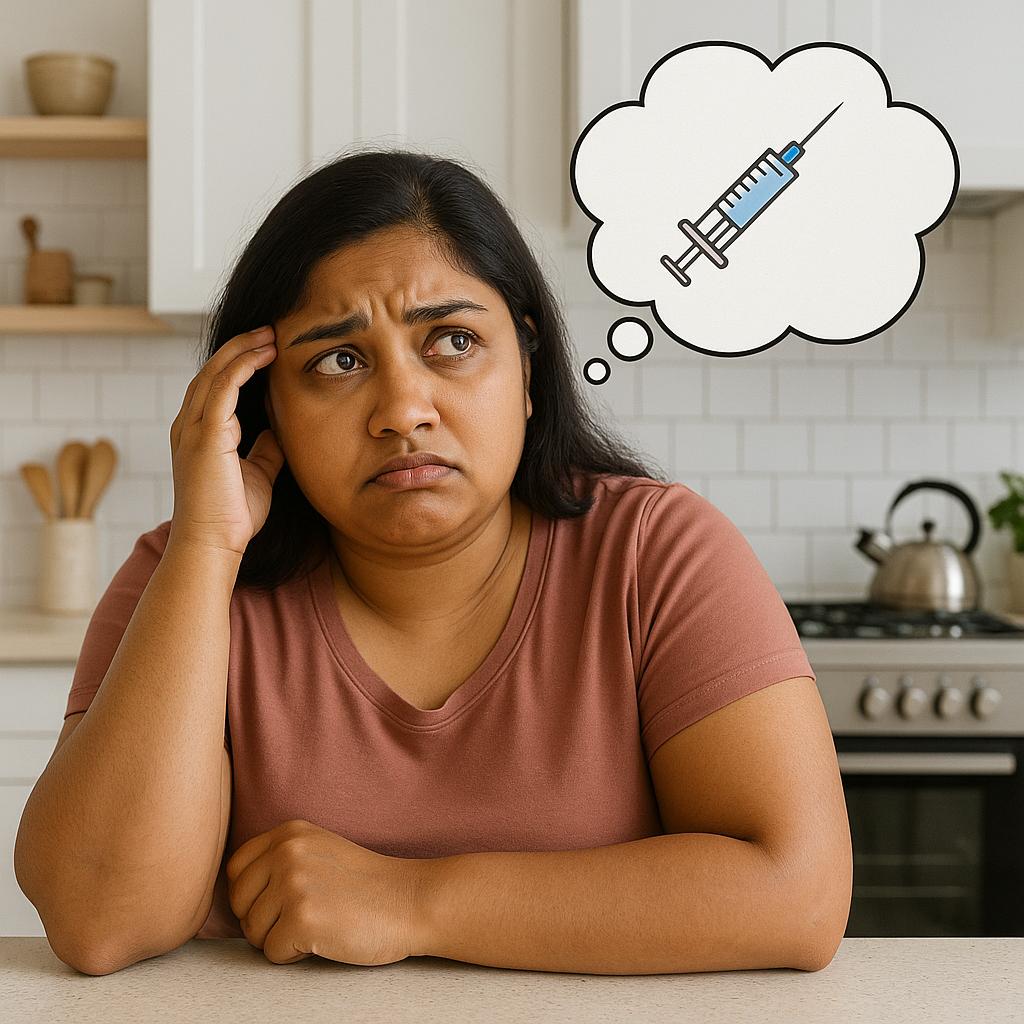
Needle anxiety often becomes most intense before someone has even opened the pen box. The mind fills in the gaps: the injection will hurt, the pen will be difficult to use, or something will go wrong. In practice, many people feel more settled once they understand the device, know what sensations to expect and have a clear plan for the first dose.
You do not need to hide the fear or force yourself through it. Tell your prescribing team how you react to needles, including whether you have fainted during blood tests or vaccinations. That detail matters because the most useful technique depends on whether your body tends towards faintness or panic.
Why a Fear of Needles Happens
A fear of needles can begin after a painful or frightening medical experience, but some people cannot identify a single cause. The fear may centre on pain, seeing blood, losing control, fainting or making a mistake. Even reading about an injection can trigger physical symptoms such as sweating, nausea, a racing heart or dizziness.
Avoiding needles can bring immediate relief, but repeated avoidance can make the fear stronger. This is one reason gradual exposure is used in the treatment of phobias. It helps the brain learn, in manageable steps, that the situation can be tolerated safely.
Practical takeaway: Write down exactly what worries you. Fear of pain, fear of fainting and fear of using the pen incorrectly need different support.
Do You Feel Faint or Panicky?
People often use the word anxiety for two different physical responses. One person may feel light-headed, pale and close to fainting. Another may feel a racing heart, tight chest and a strong urge to escape without feeling faint. NHS guidance separates these because a technique that relaxes the body may not be suitable when blood pressure is already dropping.
If you tend to faint: applied tension
Applied tension is designed to raise blood pressure towards a normal level. Sit somewhere safe, tense the muscles in your arms, upper body and legs for around 10 to 15 seconds, then release the tension for 20 to 30 seconds. Repeat the sequence several times. Practise it before injection day rather than attempting it for the first time while holding a pen.
Ask a healthcare professional whether the technique is suitable for you, particularly if you have a condition that could make muscle tensing inappropriate. If fainting has happened before, arrange to sit or lie down and have another person nearby.
If you feel panicky without fainting: slow breathing
Place both feet on the floor and let your shoulders drop. Breathe gently into your abdomen, keeping the breath slow and comfortable rather than taking large gulps of air. Give your attention a simple job, such as counting breaths, listening to a familiar song or speaking to someone you trust. Do not use relaxation breathing if it makes you feel more faint.
A Practical Plan for Your First Injection
- Tell the pharmacy team. Explain what happens when you see a needle and whether you have fainted before. Ask any questions before injection day.
- Learn your own pen. Mounjaro and Wegovy devices do not all work in the same way. Read the leaflet supplied with your medicine and use the correct Mounjaro and Wegovy injection instructions.
- Choose the time and place. Pick a calm, private setting without a deadline immediately afterwards. Sit down if you are prone to dizziness.
- Lay everything out first. Have the correct pen, the device instructions, any required new needle and a suitable sharps container within reach.
- Use one coping strategy. Choose applied tension, slow breathing or distraction according to your symptoms. Trying several new techniques at once can feel overwhelming.
- Stop if you are unsure. Contact your pharmacist rather than guessing, redialling the pen or taking another dose.
Do not use a live pen simply to rehearse. A pharmacist or nurse can explain the device, and some services may be able to demonstrate technique with an appropriate training device. Never share an injection pen or needle.
How Gradual Exposure Can Help
Gradual exposure means approaching the fear in small, planned steps. You might start by reading about the pen, then looking at its packaging, watching a demonstration, holding a capped device and finally preparing for the real injection with clinical support. You stay with each step until the anxiety becomes more manageable before moving on.
The aim is not to eliminate every anxious feeling before you continue. It is to learn that anxiety can rise and then settle without the feared outcome occurring. If even the earliest step causes overwhelming distress, work with a trained therapist rather than pushing through alone.
Weight Loss Injection Alternatives
A fear of needles does not automatically rule out injectable treatment. Some people become comfortable with a weekly pen after a demonstration and a supported first dose. Others decide that an injection is not acceptable to them. Your preferences should be part of the prescribing conversation.
There are prescription weight-loss tablets as well as injections. Wegovy pills contain oral semaglutide and are taken once daily. Foundayo weight loss pills contain orforglipron and are also taken daily. Either may be easier to consider when needles are a genuine barrier, but the medicines have different instructions, evidence and suitability criteria.
These are different medicines, rather than Mounjaro in tablet form.
A tablet is not automatically the better option because it avoids a needle. Suitability also depends on your health, current medicines, treatment goals and ability to follow the dosing instructions. A prescriber must assess this with you.
When to Ask for Professional Support
Speak to your pharmacist, prescriber or GP if fear causes you to delay or miss doses, inject unsafely, faint, have panic attacks or avoid other essential healthcare. Do not change the dose or stop a prescribed medicine without discussing it with the prescribing team.
The NHS lists CBT as a treatment for phobias, and people in England can usually self-refer to NHS Talking Therapies. Professional support is especially useful when the fear affects blood tests, vaccinations, dental care or other parts of your health as well as weight-loss treatment.
Safety reminder: If you are unsure whether a full dose was delivered, do not repeat the injection. Check the instructions for your exact pen and contact your pharmacist.
Frequently Asked Questions
Can a fear of needles go away? ⌄
It can become much more manageable. Gradual exposure and CBT are established approaches for phobias. Progress may mean completing an injection safely despite some anxiety rather than never feeling nervous again.
What helps with needle anxiety before an injection? ⌄
Tell the person supporting your care, learn the steps in advance, prepare your equipment and choose a calm setting. Applied tension may help if you faint, while gentle breathing and distraction may help panic without faintness.
Do Mounjaro or Wegovy injections hurt? ⌄
Some people feel a brief sting or pressure, while others feel very little. Experience varies. Follow the instructions for your own pen and contact the pharmacy team if pain is severe, persistent or accompanied by a concerning skin reaction.
Can someone else give me my weight-loss injection? ⌄
Another person may be able to help if they have been shown how to use your exact pen and follow its instructions. Ask your prescribing team before relying on someone else, and never share a pen or needle.
Should I use numbing cream before injecting? ⌄
Do not apply a product without checking that it is appropriate and will not interfere with skin preparation. For many people, anxiety about anticipated pain is greater than the discomfort itself. Ask your pharmacist if pain is your main concern.
What should I do if I cannot complete an injection? ⌄
Put the pen down safely and contact your pharmacist or prescriber. Do not guess how much medicine was delivered or give another full dose. The right advice depends on the pen, what stage you reached and the timing of the dose.
A Note from Our Pharmacist
Palvinder Deol, Superintendent Pharmacist, Happy Pharmacy
Needle anxiety is often accompanied by embarrassment. People apologise for feeling nervous or assume they are the only person who needs extra time. You do not need to apologise. Telling us how you react helps us give safer, more useful advice.
I would rather you pause and ask a question than rush because you feel you should already know what to do. Learn the device before injection day, keep the instructions beside you and tell us if faintness, panic or uncertainty is getting in the way. The aim is a safe routine you can repeat, not a brave performance on the first attempt.
If injections remain a firm barrier after support, say so during your assessment. Wegovy pills and Foundayo give us oral options to consider, although avoiding needles is only one part of the decision. We still need to check which medicine fits your health, other treatments and daily routine.
References
1. NHS: Phobias
• Symptoms, causes and treatments for phobias, including CBT and access to NHS Talking Therapies. NHS.uk
2. Guy's and St Thomas' NHS Foundation Trust: Needle phobia
• Practical guidance on applied tension, breathing and professional support for needle fear. Guy's and St Thomas'
3. NHS Every Mind Matters: Facing your fears
• A structured introduction to gradual exposure and reducing avoidance. NHS.uk
4. Mounjaro Patient Information Leaflet
• UK medicine and device information for tirzepatide. Read the eMC leaflet
5. Wegovy Patient Information Leaflet
• UK medicine and device information for semaglutide. Read the eMC leaflet
Start Your GLP-1 Treatment Safely
Complete our secure online consultation. Our pharmacy team will review your answers and advise whether a prescription weight-loss treatment is suitable for you.
Start Your Weight Loss Consultation →Medically Reviewed by Our GPhC-Registered Pharmacists


Share:
Alcohol and Weight Gain: What Is the Link?
Holiday Weight Gain: How to Get Back on Track